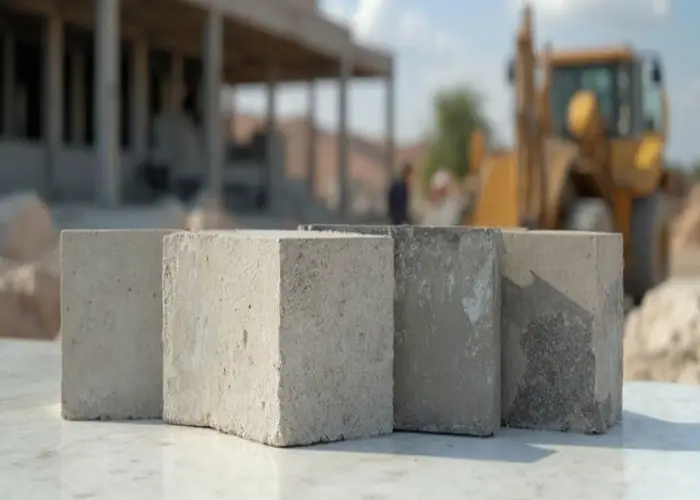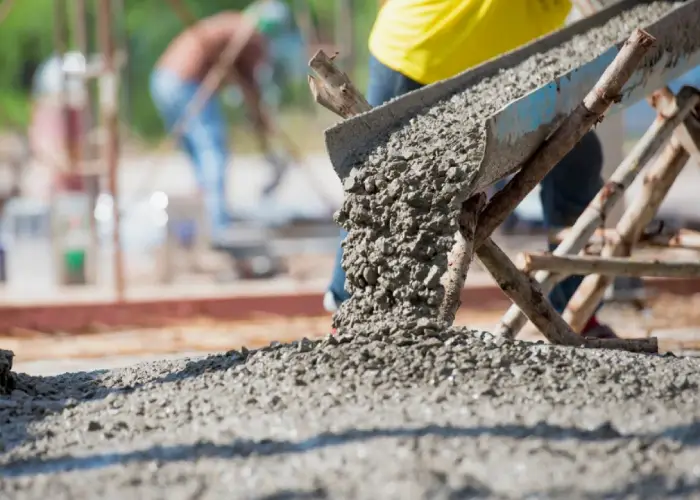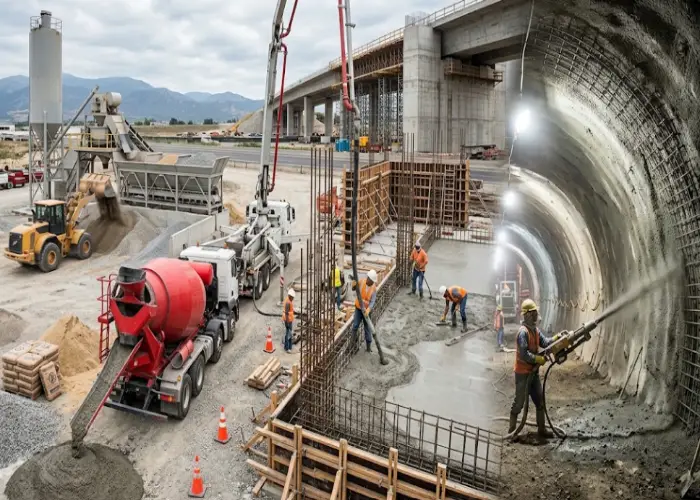
Concrete is a construction material composed of cement, water, sand, and aggregates (gravel or crushed stone). When it is mixed, the cement starts to harden and becomes strong when it comes into contact with water. What is concrete exactly? In short, concrete is one of the most important materials used to build houses, roads, bridges, tunnels, dams, and many other structures. Continue reading to find out what is concrete used for.
What Is Concrete Made Of?
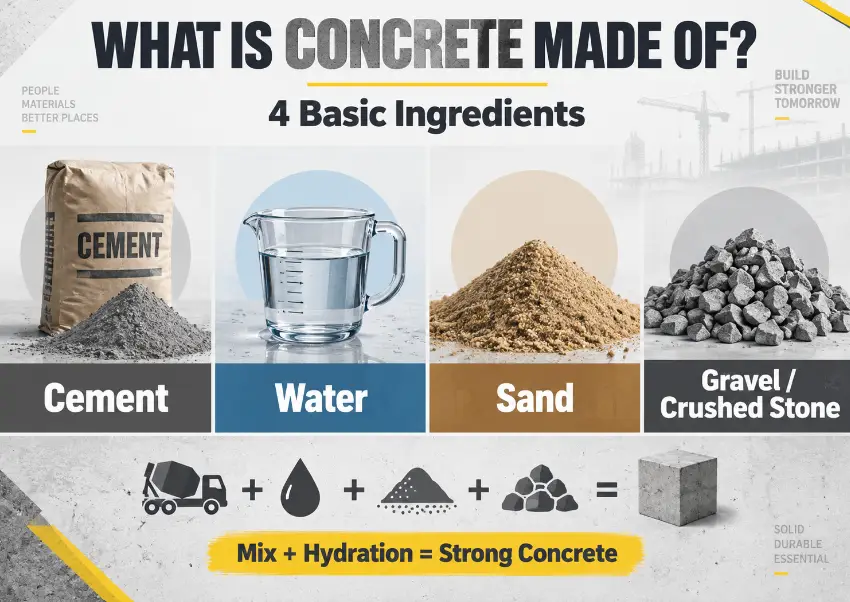
To understand what is concrete made of, we should know that most concrete mixes are made up of four basic materials:
- Cement
- Water
- Sand
- Gravel or crushed stone
The aggregates are bound together with a paste of cement and water.
Admixtures can also be added to concrete. These materials can improve workability, control setting time, or enhance concrete performance in challenging conditions. The exact combination will be different depending on the project.
How Does Concrete Become Hard?
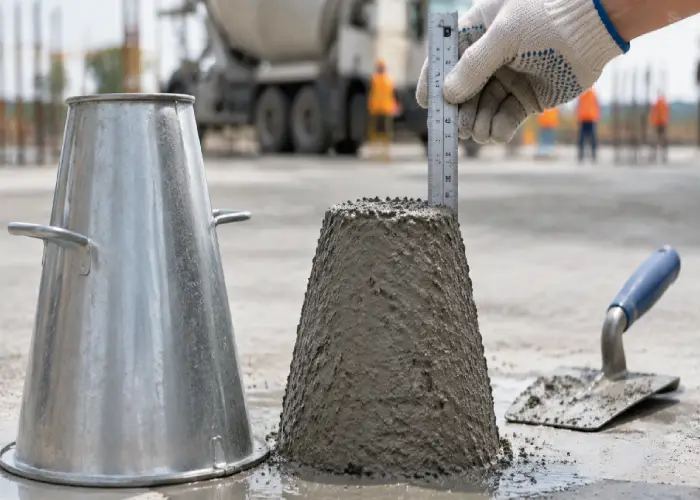
Concrete is not necessarily strong when it dries. Hydration is a chemical reaction that begins when water and cement come into contact. This reaction makes the cement paste set and adhere to the aggregates.
The amount of water is also important. Excessive water can decrease strength, and inadequate water can cause the concrete to be difficult to place.
What Is Concrete in Civil Engineering?
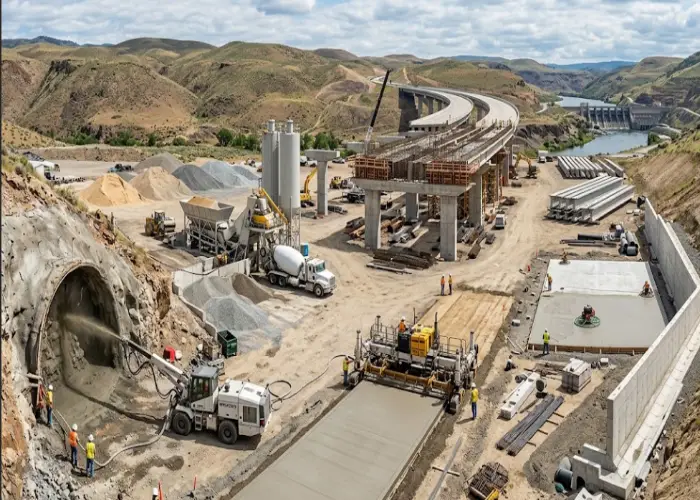
In civil engineering, what is concrete? Concrete is one of the most common materials used for structural and infrastructure projects, such as:
- Foundations
- Columns
- Beams
- Floors
- Roads
- Bridges
- Tunnels
- Dams
- Retaining walls
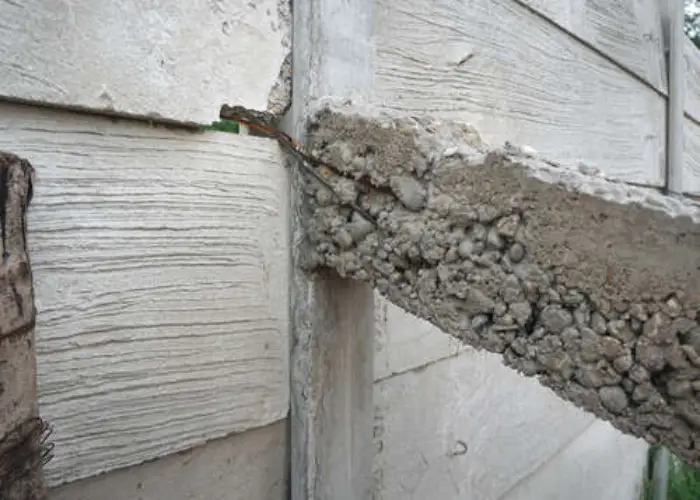
Concrete performs very well under compression. For this reason, engineers often add steel reinforcement to concrete.
What Are the Main Types of Concrete?
There are different types of concrete for different construction needs:
| Type of Concrete | Common Use |
| Plain concrete | Floors and simple structures |
| Reinforced concrete | Buildings, beams and foundations |
| Precast concrete | Factory-made panels and parts |
| Prestressed concrete | Bridges and large spans |
| Lightweight concrete | Structures that need less weight |
| Self-consolidating concrete | Complex forms and dense reinforcement |
| High-performance concrete | Heavy-duty structures |
| Shotcrete | Tunnels, slopes and repairs |
The right type depends on strength requirements, location, environment, and construction method.
What Is Concrete Used For?
If you are wondering what is concrete used for, the answer is simple: concrete is used in almost every part of construction. Common applications include:
- Houses
- Commercial buildings
- Roads
- Bridges
- Tunnels
- Dams
- Floors
- Foundations
- Walls
- Drainage systems
Concrete is popular because you can shape it before it hardens. It can also provide strength and durability for many years when designed and placed correctly.
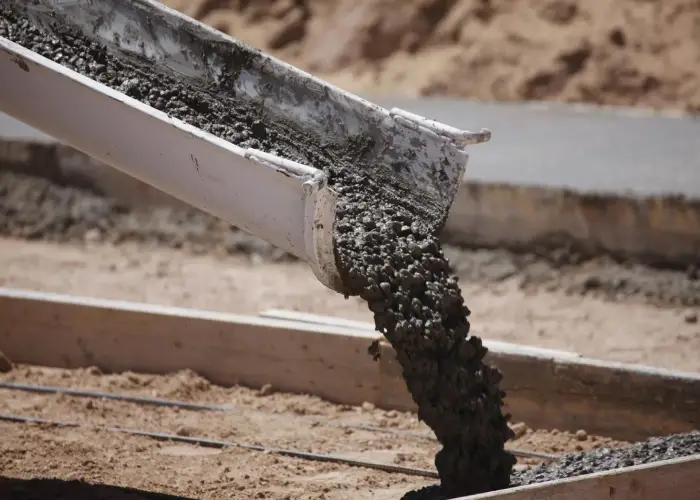
What Is Concrete Used for in Construction?
Concrete is used in buildings for foundations, slabs, columns, and walls. It can be used in road projects for pavements, barriers, and drainage sections.
What is concrete used for in construction? In bridge building, concrete is frequently used for decks, supports, and foundations. Concrete can be pumped or sprayed on surfaces in tunnels.
Concrete in Tunnel Construction
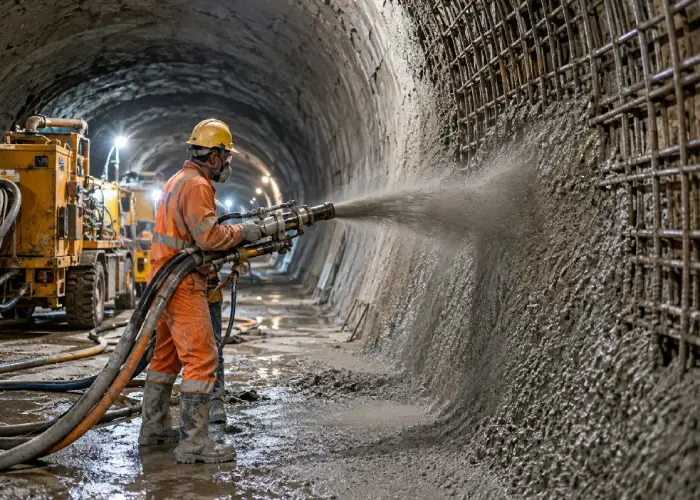
Tunnel projects often have limited space and difficult working conditions. In these projects, contractors need to place concrete on uneven walls or overhead surfaces. This is where shotcrete becomes useful.
Shotcrete is concrete or mortar that is sprayed onto a surface at high speed. It is commonly used for:
- Tunnel walls
- Underground structures
- Slope stabilization
- Concrete repair
- Mining projects
Shotcrete systems come in two types: wet-mix and dry-mix. The appropriate process depends on the material, project size, desired output, and site conditions.
What Is Concrete in Research?
Typically, what is concrete in research refers to studies that look at how concrete works. Researchers often study:
- Concrete strength
- Workability
- Cracking
- Durability
- Water-to-cement ratio
- Aggregate quality
- Curing
- Admixtures
- Shrinkage
- Permeability
What is concrete in civil engineering today? There is a focus on the development of more robust and durable concrete, as well as more environmentally sustainable construction processes and materials. These studies enable engineers to enhance the performance of concrete and to prolong the life of buildings, roads, bridges, and tunnels.
What Are the Main Concrete Equipment?
Tiran Tunnel Bistoon provides equipment for different types of construction applications:
- Wet and dry shotcrete machines
- Mortar pumps
- Sand transfer machines
- Plaster spraying pumps
- Screed machines
Choosing the Right Concrete Machine
There is no single machine that works for every project. Before choosing equipment, contractors should check:
- Type of material
- Required output
- Aggregate size
- Pumping distance
- Working height
- Site conditions
- Power supply
- Wet or dry spraying method
For tunnel projects, the difference between wet and dry shotcrete can also affect equipment selection.
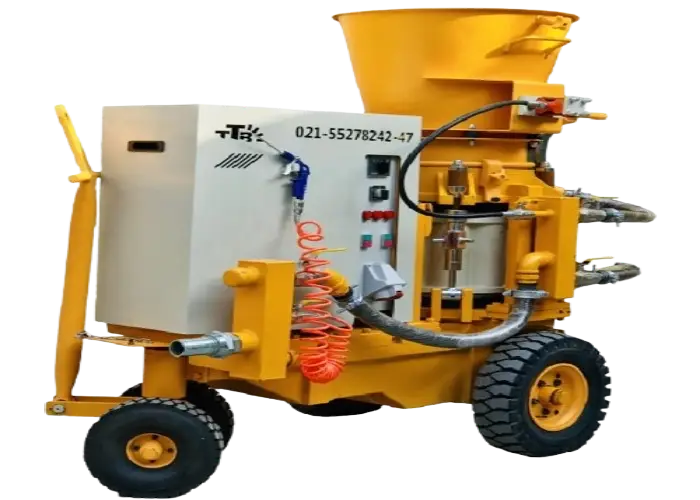
Tiran Tunnel Bistoon and Concrete Applications
Tiran Tunnel Bistoon provides machines for several concrete and mortar applications, particularly pumping, spraying, and material transfer. Shotcrete machines can be used for tunnel construction and repair. Mortar pumps can move mortar from one place to another on a site, and plaster spraying machines can speed up and standardize plastering. Check our products and contact us if you need help in choosing the best equipment.
FAQs
- What is concrete?
Concrete is a construction material made from cement, water, sand and aggregates.
- What is concrete made of?
Concrete is mainly made of cement, water, fine aggregate and coarse aggregate.
- What is concrete used for?
Concrete is used for buildings, roads, bridges, tunnels, dams, floors and foundations.
- Is concrete the same as cement?
No. Cement is one of the main ingredients used to make concrete.
- What equipment is used for tunnel concrete work?
Tunnel projects use shotcrete machines, mortar pumps, and material transfer equipment. Tiran Tunnel Bistoon provides several machines for these applications.