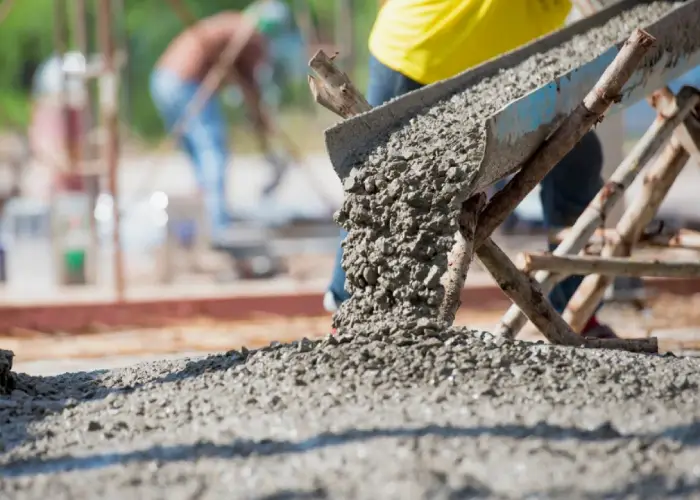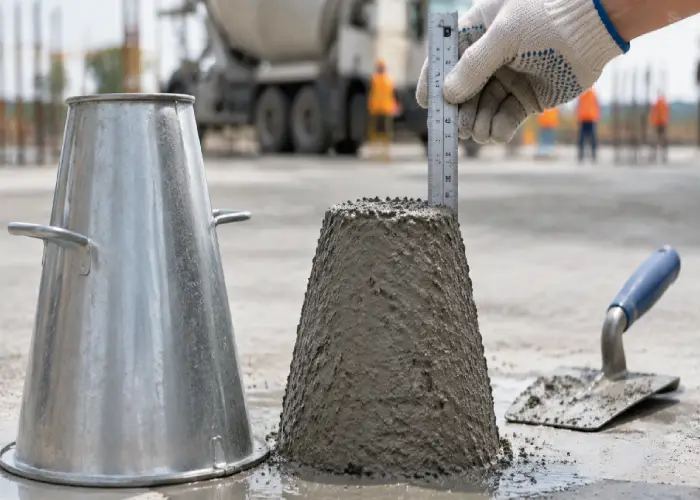
The concrete slump test measures how much fresh concrete settles after a standard cone is lifted. It helps workers check concrete consistency before placing or pumping. The test uses a 300 mm cone filled in three layers, with 25 tamping strokes per layer. The measured slump is then compared with the project’s required range. We will explain more about the concrete slump test procedure and its steps.
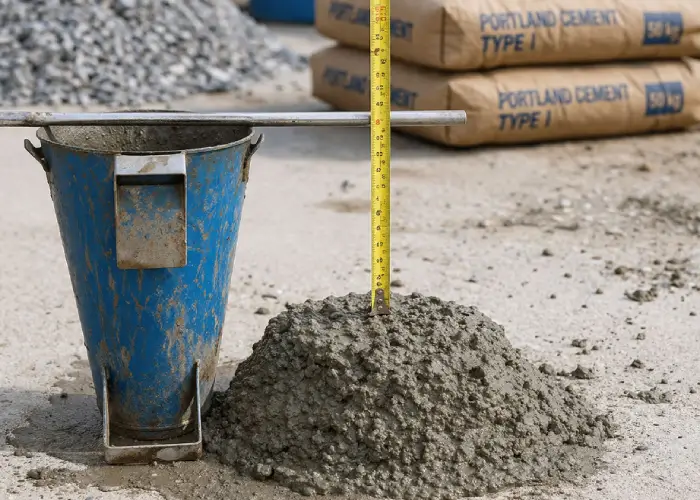
What Is a Concrete Slump Test?
The slump cone test is a field and lab test used to determine the consistency of fresh concrete. It does not measure compressive strength directly, but offers a good sense of changes in the mixture and does not describe the mixture’s workability. The slump cone measurement test is especially useful when the concrete is being shipped to a construction site where the water content, the admixtures, the quality of the aggregates, the temperature, and the length of time the concrete is transported can change.
ASTM C143/C143M and EN 12350-2 are two widely recognized test standards. Both establish procedures for measuring slump, but their reporting requirements and procedures vary.
Slump Cone Test Equipment and Dimensions
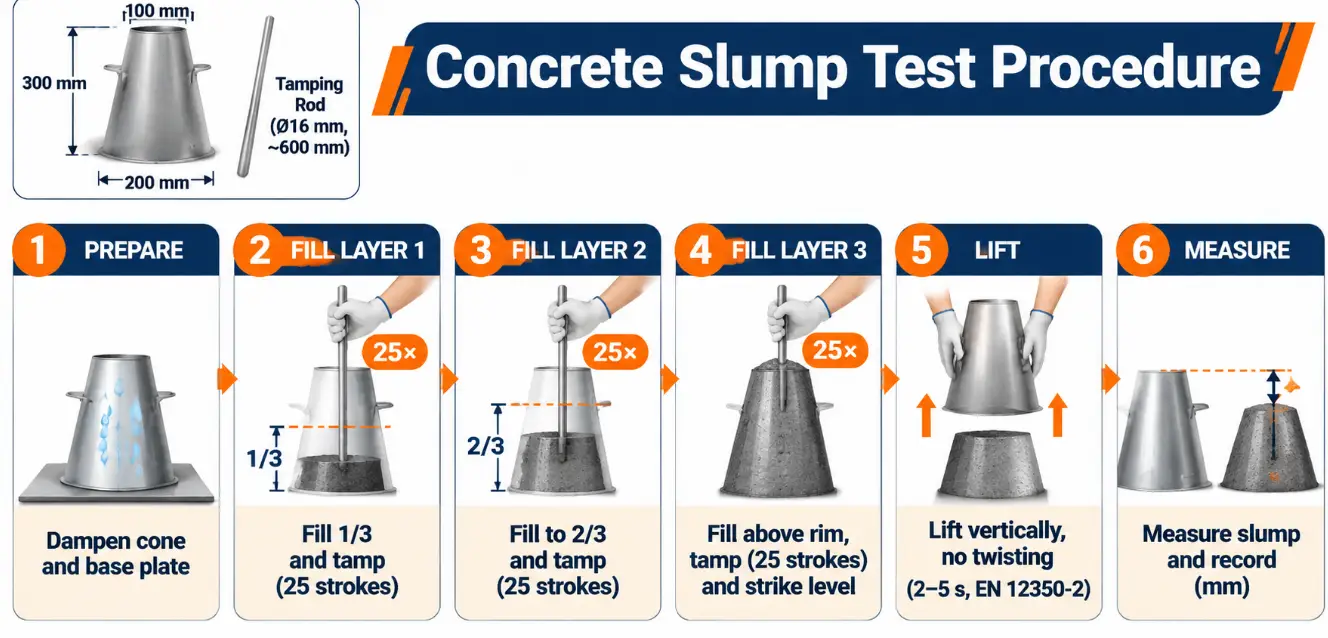
The test needs a standard metal slump cone for concrete, a tamping rod, a rigid base plate, and a measuring device.
| Equipment | Standard specification |
| Slump cone height | 300 mm |
| Bottom diameter | 200 mm |
| Top diameter | 100 mm |
| Tamping rod | 16 mm diameter, approximately 600 mm long |
| Base plate | Flat, rigid, and non-absorbent |
| Measuring tool | Graduated ruler or suitable measuring device |
The cone must be clean and have a uniform shape. An uneven base, damaged mold, or unsuitable tamping rod can change the results.
Concrete Slump Test Procedure: Step by Step
The slump test process includes:
- Prepare the equipment. Dampen the cone and base plate. Put the cone on a flat, moist, rigid, non-absorbent surface.
- Fill the cone with one-third of the cone’s volume with fresh concrete. Compact with 25 evenly distributed tamping strokes.
- Put on the second layer. Fill to about two-thirds of the cone’s capacity and tamp the layer 25 times.
- Pour concrete over the top of the cone, compact with 25 strokes, and remove the top to form a flat surface.
- Lift the cone slowly and firmly, but with no twisting motion. The removal time is around 2-5 seconds for EN 12350-2.
- Measure the slump. Place the cone beside the concrete and measure the vertical drop at the displaced original center of the top surface. Record the concrete slump test results in millimeters.
Types of Slump Test Results
When the slump cone is removed in a concrete workability test, three typical shapes can be observed:
True Slump
The concrete settles evenly and keeps its general shape. This is a valid result for measuring slump.
Shear Slump
One side of the concrete slides away. This indicates poor cohesion. Repeat the test with a fresh sample.
Collapse Slump
The concrete loses its shape and spreads out. This is too fluid for a conventional concrete slump test.
Concrete Slump Values and Standard Classes
Concrete slump values indicate consistency, but the acceptable range depends on the mixture design, placement method, and project specifications. The European EN 206 classification system defines the following slump classes:
| Slump class | Slump value | Consistency |
| S1 | 10–40 mm | Low |
| S2 | 50–90 mm | Moderately low |
| S3 | 100–150 mm | Medium |
| S4 | 160–210 mm | High |
| S5 | 220 mm or greater | Very high |
Factors Affecting Concrete Workability and Slump
Several factors influence the slump cone test, even when the concrete mix proportions remain unchanged.
- Water content: Additional water generally increases slump.
- Aggregate properties: Particle shape, grading, and absorption influence internal friction and water demand.
- Chemical admixtures: Plasticizers and superplasticizers can improve concrete flow without adding extra water.
- Temperature: Hot conditions can accelerate slump loss during transportation and placement.
- Elapsed time: Concrete can gradually stiffen between mixing, delivery, and testing.
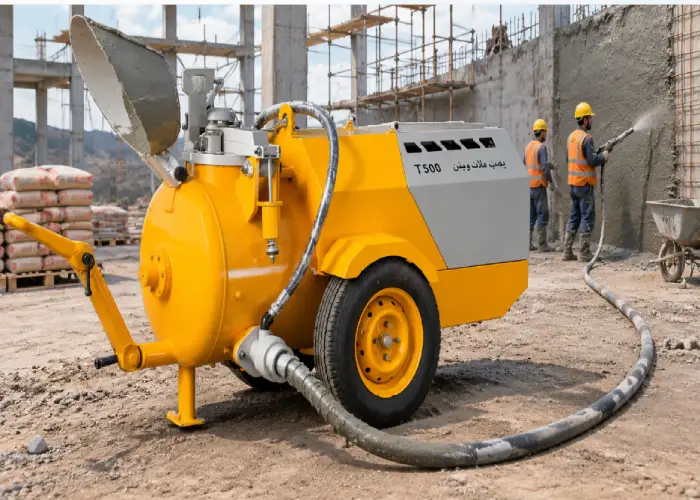
Concrete Equipment Selection at Tiran Tunnel Bistoon
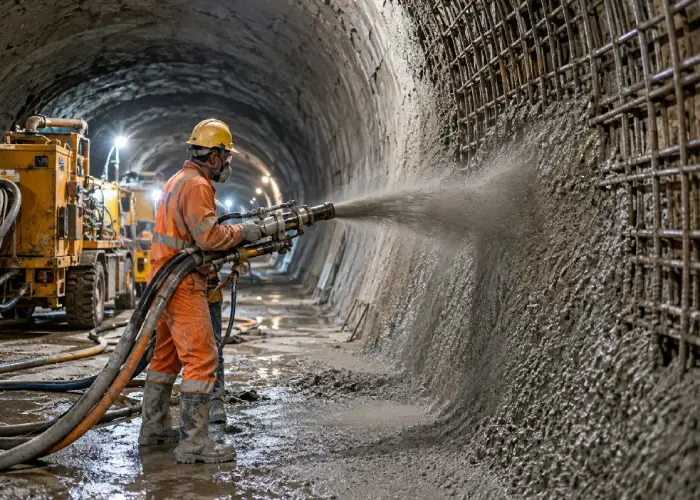
At Tiran Tunnel Bistoon, concrete consistency and equipment selection are critical. Tiran Tunnel Bistoon produces construction machinery such as wet-mix, dry-mix shotcrete machines, piston-type spraying machines, mortar pumps, and material spraying systems. Shotcrete machines apply concrete through spraying in tunnel construction, structural surface treatment, and other fields, while mortar pumps pump and apply mortar. Contractors can explore Tiran Tunnel Bistoon’s shotcrete machines and mortar pumps to find equipment that suits their concrete mix, pumping needs, and project conditions.
FAQs
- What is the purpose of a concrete slump test?
The concrete slump test checks the consistency of fresh concrete. It helps workers see whether the mix is suitable for placing and compacting.
- What is a good slump value for concrete?
There is no single ideal value. A slump of 50–100 mm can suit some projects, but the correct range depends on the concrete mix and job requirements.
- How do you calculate slump cone measurement?
Subtract the measured height of the slumped concrete from the original 300 mm cone height. For example, 300 − 220 = 80 mm.
- What does a zero slump mean in concrete?
Zero slump means the concrete barely settles after removing the cone. It shows a very stiff mix that is difficult to place without suitable compaction equipment.
- What is the difference between a slump test and a concrete workability test?
The slump test measures concrete consistency. Workability is broader and includes how easily concrete can be mixed, placed, and compacted without separating.