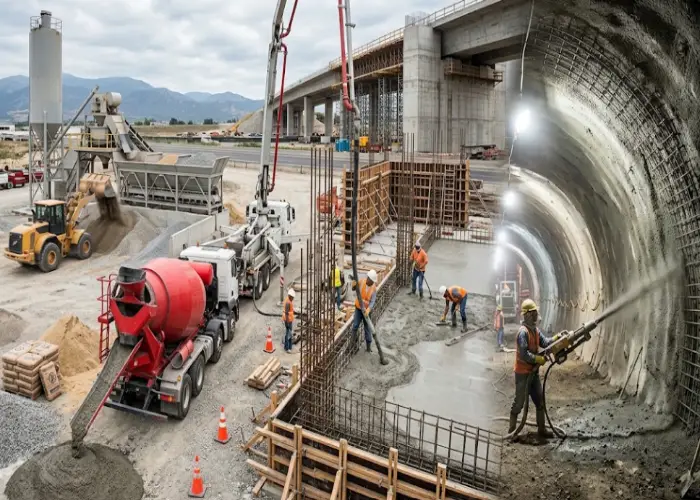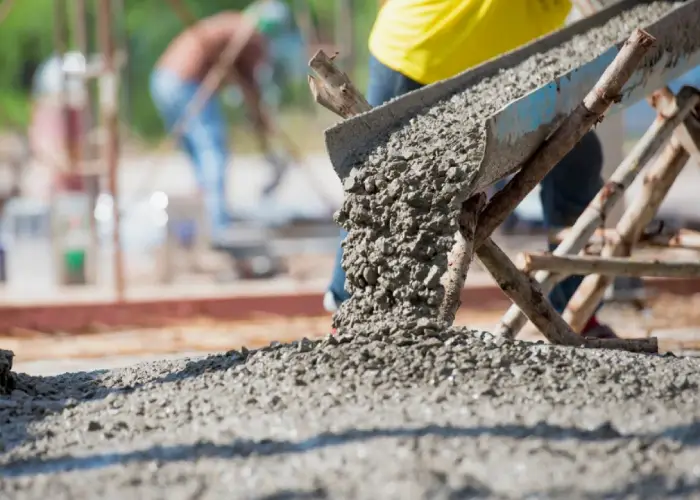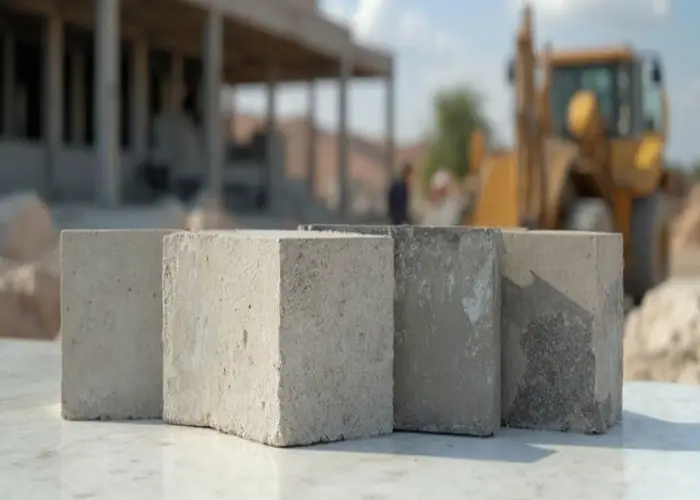
Some common types of concrete include plain, reinforced, prestressed, precast, lightweight, self-consolidating, high-performance, and shotcrete concrete. Selecting the proper type depends on some factors, including the strength required, the environment in which it must operate, the loads it must support, the construction technique, and the project specifications. In modern construction projects, using suitable equipment such as a Material transfer device can improve the handling, transportation, and delivery of concrete materials, leading to more efficient and accurate concrete operations. This is why no one-size-fits-all formula for the ideal concrete for a bridge or tunnel exists: Each project has its own requirements, and the best concrete for one may be different. Continue reading about more than 5 types of concrete.
What Are the 3 Main Types of Concrete?
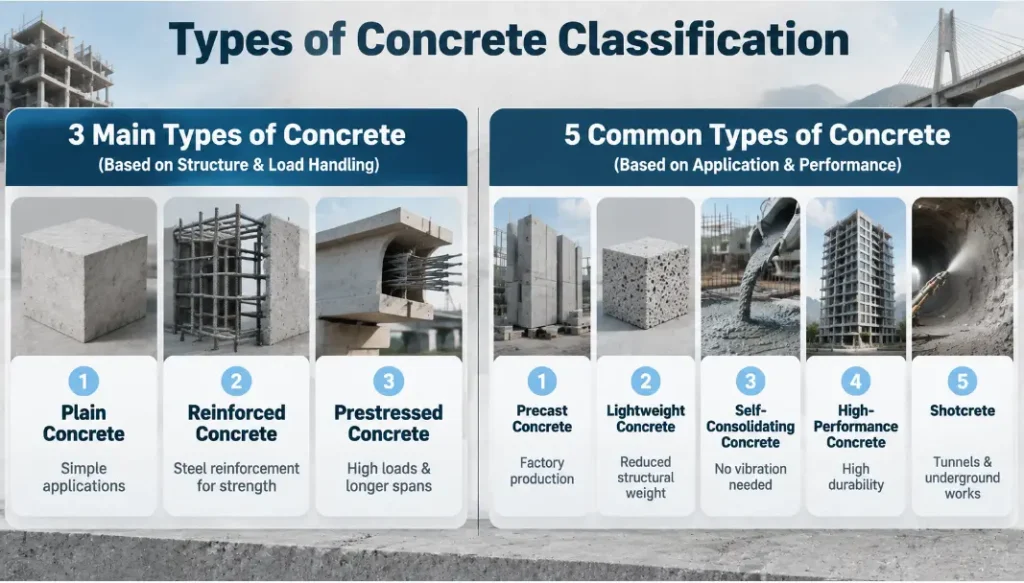
Generally, there are 3 types of concrete based on how they handle loads and reinforcement, including:
- Plain concrete
- Reinforced concrete
- Prestressed concrete
Concrete is utilized in three ways to deal with loads and stresses in structures.
better to read: concrete ratios and grades
Plain Concrete
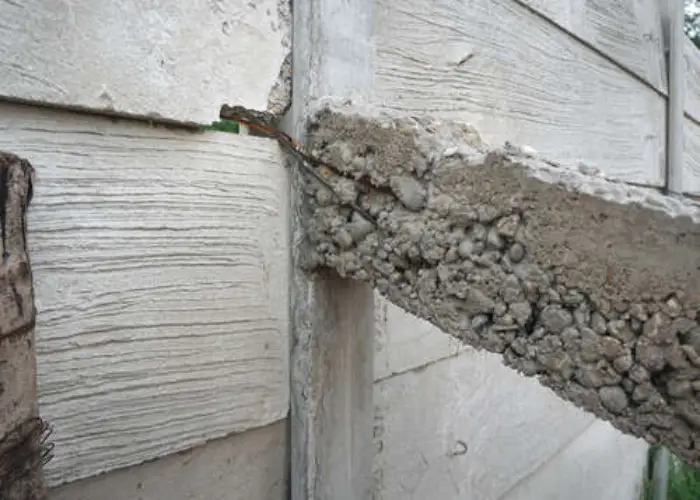
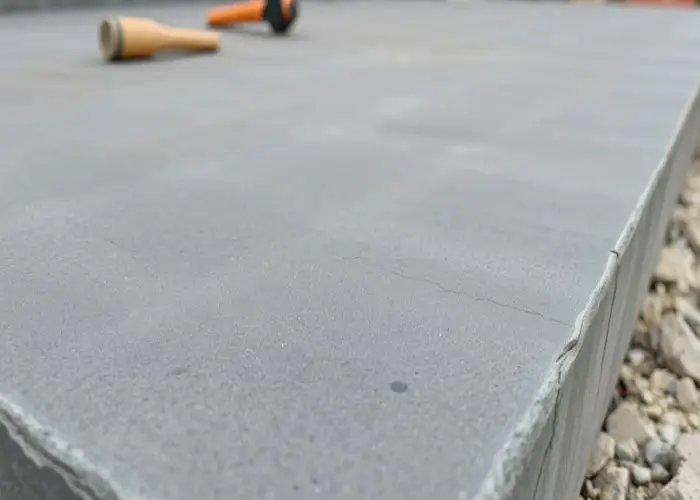
Plain concrete is concrete that is not structurally reinforced or has less than the required reinforcement. It is extremely resistant to compression and not so strong in tension. So, it is primarily applied in situations where high bending and/or pulling loads are not anticipated.
Plain Concrete is used in the following applications:
- Pavements
- Simple foundations
- Floor bases
- Curbs
- Non-structural applications
Reinforced Concrete
Another type among 3 types of concrete is reinforced concrete that is a widely used form of concrete construction in modern buildings. In this system, the steel bars, mesh, or fibers are embedded in the concrete to enhance its tensile strength property. Concrete is used for compression, and steel reinforcement for tension.
Reinforced concrete has a wide application in:
- Buildings
- Bridges
- Columns
- Beams
- Slabs
- Foundations
Concrete and steel are very strong materials for structures and are used in a wide range of construction projects.
Prestressed Concrete
Prestressed concrete is used to enhance the performance of concrete when subjected to high loads. This is a technique in which the high tensile strength steel tendons are put under tension to create compression in the concrete. This decreases tensile stresses and provides engineers with longer spans to work with and to design structures efficiently.
The following are examples of the uses of prestressed concrete among 3 types of concrete:
- Bridges
- Large beams
- Parking structures
- Industrial structures
- Long-span floors
This type of concrete is particularly effective in controlling cracking and enhancing structural capacity.
5 Types of Concrete Commonly Used in Modern Construction
Beyond structural classification, concrete can also be grouped by production method and special performance requirements. Here are 5 types of concrete:
| Type | Why It Is Used |
| Precast Concrete | Faster installation and controlled production |
| Lightweight Concrete | Reduces structural weight |
| Self-Consolidating Concrete | Suitable for complex reinforcement |
| High-Performance Concrete | Designed for demanding structures |
| Shotcrete | Ideal for tunnels and underground works |
These are only examples. Engineers select concrete types according to the needs of each project.
1. Precast Concrete
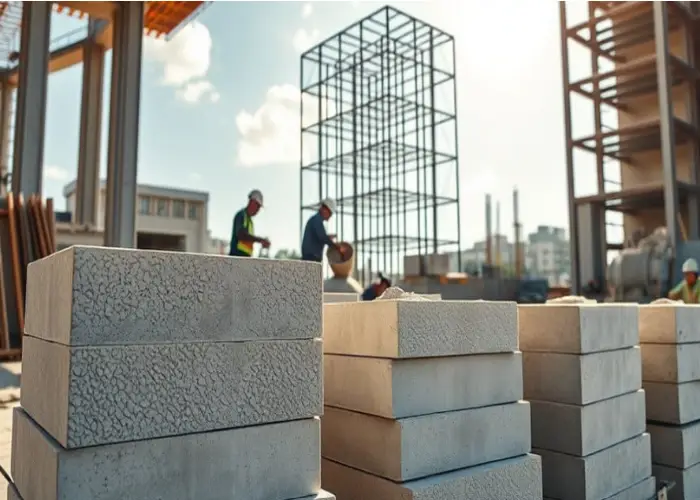
Precast concrete is manufactured in a controlled factory and delivered to the building site. Production is performed in a controlled environment, so the manufacturer can ensure the quality, dimensions, and production control.
Precast concrete is typically used for:
- Wall panels
- Concrete beams
- Columns
- Stairs
- Bridge components
- Industrial structures
Precast is not a new concrete product, but a manufacturing process.
1. Lightweight Concrete
Lightweight concrete, among the 5 types of concrete, is produced by using lightweight aggregates or special production techniques to lower the overall density of the concrete.
Common uses include:
- High-rise buildings
- Bridge decks
- Roof structures
- Rehabilitation projects
The final performance will be influenced by the materials and mix design selected.
2. Self-Consolidating Concrete (SCC)
Self-consolidating concrete is a flowable concrete that is capable of flowing into reinforcement areas without the need for conventional vibration.
It is useful when:
- Reinforcement is very dense
- Concrete placement areas are difficult to access
The surface finish needs to be smooth.
The successful design of an SCC mix should ensure that it does not separate and is stable.
3. High-Performance Concrete
High-performance concrete is concrete that has better properties than those of conventional concrete. These improvements can be made to the following aspects of a project:
- Higher strength
- Better durability
- Lower permeability
- Enhanced ability to withstand harsh environments
It is frequently employed in buildings that need durability and dependability.
4. Shotcrete
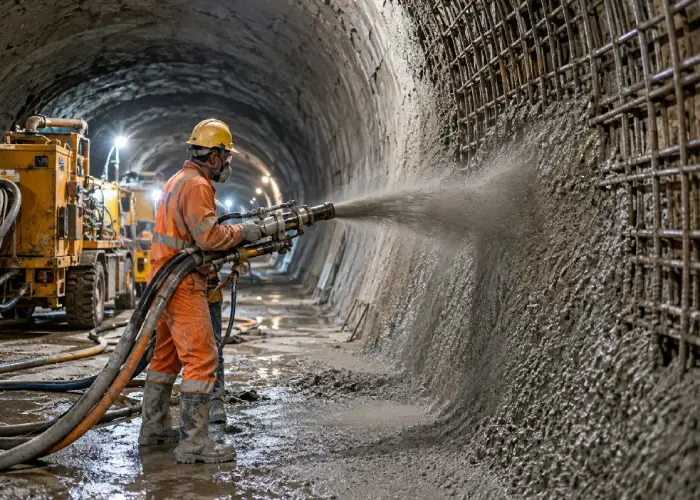
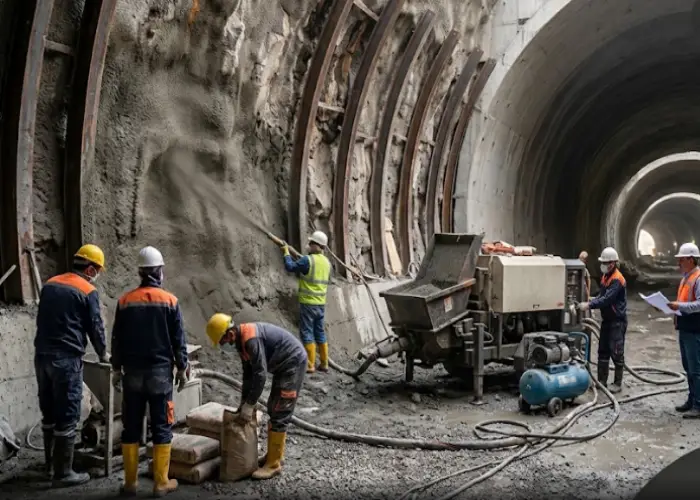
Shotcrete is another type of concrete or mortar that is pumped through a hose and propelled at high speed to a surface.
Conventional concrete placement normally requires the use of formwork, but shotcrete does not always need to use conventional formwork. It is suitable for hard-to-reach areas, like vertical walls, tunnels, or underground walls.
There are two types of shotcrete application:
Wet-Mix Shotcrete
In wet-mix shotcrete, water is blended with all of the primary ingredients before being given to the hose. Advantages include:
- The mix is more easily controllable.
- It is designed to work on larger applications
Dry-Mix Shotcrete
The dry materials are conveyed within the hose in dry-mix shotcrete, while the water is added close to the nozzle. This technique can be beneficial in the following situations:
- Smaller quantities are needed
- Work stops frequently
- Access conditions are limited
They are both used extensively for tunnel construction, mining, repair, and slope stabilization.
How to Choose the Right Type of Concrete
Selecting the correct types of concrete depends on the purpose of the project.
For example:
- Residential buildings can use reinforced concrete.
- Bridges need prestressed or high-performance concrete.
- Drainage surfaces may benefit from pervious concrete.
- Complex structures require self-consolidating concrete.
- Underground projects often use shotcrete because of its application advantages.
The correct choice depends on engineering requirements rather than simply choosing the strongest concrete available.
Concrete and Shotcrete Equipment from Tiran Tunnel Bistoon (TTB)
For tunnel and underground construction, having the correct equipment is as important as selecting the right concrete type. Tiran Tunnel Bistoon (TTB) offers all the equipment and tools for concrete spraying and material handling, such as wet-mix and dry-mix shotcrete machines, mortar pumps, and cement spraying machines. Visit our website and select the best machines according to your projects.
FAQs
- What are the main types of concrete?
The main types of concrete include plain concrete, reinforced concrete, prestressed concrete, precast concrete, lightweight concrete, and shotcrete. Each type is designed for different construction needs.
- What are the 3 types of concrete?
The three basic structural types of concrete are plain concrete, reinforced concrete, and prestressed concrete. They are classified based on how they handle loads and reinforcement.
- What are the 5 common types of concrete?
5 types of concrete are reinforced concrete, precast concrete, lightweight concrete, self-consolidating concrete, and shotcrete. These types are selected based on strength, durability, and project requirements.
- What is shotcrete used for?
Shotcrete is sprayed concrete applied by a hose at high speed. It is commonly used for tunnels, underground support, slope stabilization, and repair works. - Which type of concrete is used for tunnels?
Shotcrete is widely used in tunnel construction because it can be applied directly to rock or concrete surfaces and provides fast support during excavation and lining operations.